Who truly profits when community festivals become tourism destinations?
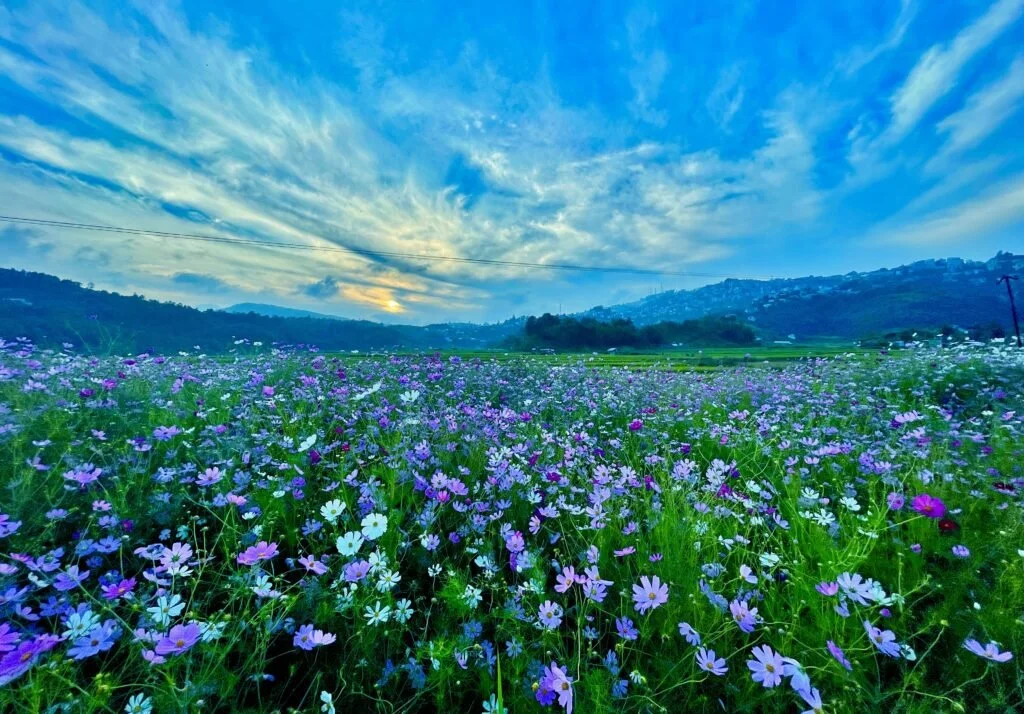
Autumn blooming of native cosmos flowers during the Cosmos Festival . Image source: https://www.hnahsinkut.com/
When the rhythmic beat of traditional drums echoes across a mountain valley, it signals more than a seasonal harvest or an ancestral ritual—it often signals the arrival of the tourism economy. Across India's indigenous belts, cultural festivals are rapidly being reframed as travel attractions. Homestays pop up in modest yards, local kitchens prepare regional delicacies, and native artisans find new markets for their craft. Culture, overnight, becomes a high-value economic asset. Yet beneath this surge of footfall lies a fundamental tension-
“Does turning a sacred celebration into a market platform protect a community’s heritage, or does it quietly strip it of its soul?
”
The economic shift is immediate. A single well-promoted festival can generate income for local transportation, guides, and small businesses. But as these events grow, a troubling pattern often emerges. External event companies, resort operators, and outside tour agencies frequently capture the lion’s share of traveler spending. The local custodians of the culture—the elders, performers, weavers, and village households—are often left with marginal profits, environmental waste, and celebrations staged more for camera lenses than for their own ancestral gods.
“A festival can create a market. But can a market strengthen a culture?
”
Regional celebrations across five geographies of India
Looking across India's diverse regions reveals extraordinary festival traditions, each navigating the delicate line between community life, environmental harmony, and commercial tourism:
Eastern Borderlands (East) — Hnahsin Kut / Cosmos Festival (Champhai, Mizoram)
Perched along Mizoram’s eastern border overlooking Myanmar, the quiet district of Champhai transforms each autumn into a blanket of pink, purple, and white as wild cosmos flowers (hnahsin) burst into bloom across the Zotlang fields. Rather than allowing outside agencies to commercialize the spectacle, local organizers launched Hnahsin Kut—a community-led eco-tourism gathering. It directly links Mizo florists, handloom weavers, winemakers, and local musicians with visitors, ensuring that seasonal tourism directly fuels local livelihoods.
(Source: Department of Tourism, Government of Mizoram; Champhai Nature Conservancy Field Documentation)
Western Ghats & Coastal Belt (West) — Shigmo Festival (Goa)
Far from the crowded beach resorts, the rural hinterlands of Goa celebrate Shigmo—the traditional spring harvest festival of the indigenous Kunbi and Gavda farming communities. Village clans gather to honor local deities through elaborate folk traditions like Ghode Modni (horse dance) and Fugdi, accompanied by massive dhol-tasha drum ensembles. Deeply tied to village shrines, Shigmo remains an authentic expression of rural Goan identity that actively resists coastal commercialization.
(Source: Department of Tourism, Government of Goa; Goa State Cultural Academy)
Himalayan Heights (North) — Phulaich / Ookayand Festival (Kinnaur, Himachal Pradesh)
High in the Kinnaur valley, Phulaich (the Festival of Flowers) is celebrated by tribal villagers to honor mountain spirits (deotas) and remember departed ancestors. Village youths hike up to high alpine meadows to gather sacred wild blossoms, returning to the village square for ritual chants, traditional brass orchestra music, and communal dancing—an ancient tradition guided strictly by village elders rather than tourist itineraries.
(Source: Himachal Pradesh Tourism Development Corporation; Department of Language, Art & Culture, HP)
Deccan Plateau (South) — Samakka-Saralamma Jatara (Medaram, Telangana)
Observed by the Koya tribe in the dense forests of Mulugu, this biennial congregation honors a mother and daughter who fought against historical injustice. As one of the largest indigenous gatherings in the world, millions of pilgrims gather without any corporate event staging. The rituals remain entirely faith-driven, governed by traditional Koya priests who preserve the sanctity of their sacred groves.
(Source: Telangana State Tourism Development Corporation; Official Medaram Jatara Board)
Eastern Himalayan Foothills (East/Northeast) — Tungtungkamu / Totopara (Alipurduar District, West Bengal)
Deep in Totopara—a borderland village along the Indo-Bhutan frontier and the sole home of the Toto tribe (one of the smallest indigenous groups on Earth, with fewer than 2,000 members)—lies Tungtungkamu. This gathering completely rejects passive, commercial tourism. Built around zero-waste practices, Toto language preservation, oral storytelling, and traditional animistic rites, it invites visitors as active co-creators who learn directly from community elders, shamans, and craftspeople. By keeping attendance strictly limited, Tungtungkamu serves as a crucial model for protecting an endangered culture on its own terms.
(Source: Cultural Research Institute, West Bengal; Chittaranjan Toto Memorial Education Centre; Muhaan Initiatives)
Redefining the Future of Cultural Travel
A festival will always generate a market—the true challenge is ensuring that the market honors and protects the living culture that created it. Tourism does not have to be an extractive force that converts sacred traditions into consumable stage props. When managed with intention, it can serve as a powerful tool for cultural self-determination, intergenerational pride, and equitable local growth.
The path forward requires a fundamental shift in design and mindset. True regeneration begins when control, storytelling, and revenue remain firmly in the hands of the community. As travelers, our role is not merely to consume a spectacle, but to listen, learn, and respect the boundaries of the spaces we enter. The success of cultural travel should never be measured by how many visitors arrive, but by how much dignity, prosperity, and cultural autonomy stays behind long after the last song has faded and the crowds have returned home.